Losing a tooth changes more than a smile line. Chewing shifts to the other side. Neighbouring teeth can drift into the gap. The tooth above or below can tip or over-erupt into the empty space. At Tooth and Gums in Greater Noida, Dr. Neeraj Chauhan (BDS) often sits with patients who are choosing between a dental bridge and a dental implant. Both can restore a missing tooth well. They do it in different ways, with different trade-offs for time, neighbouring teeth, bone, and maintenance. This guide keeps the comparison practical so you can ask focused questions at your consultation.
There is no single “best” option for every mouth. Health of nearby teeth, bone volume, gum condition, bite forces, budget timing, and how long you want the solution to serve all matter. Our job is to explain those factors clearly, not to push one product. A missing tooth decision deserves a calm look at your own X-rays and clinical findings.
How a bridge replaces a tooth
A traditional bridge uses the teeth on either side of the gap as supports. Those abutment teeth are prepared so crowns can sit on them, and a false tooth (pontic) fills the space between. The whole piece is cemented as one unit. When the supports are strong and the bite is favourable, a bridge can look natural and restore chewing without surgery in the gap itself.
The trade-off is that healthy enamel on the neighbouring teeth is reshaped to carry the bridge. If those teeth already need crowns, that cost is smaller. If they are pristine, you are asking them to do extra work for the missing neighbour. Bridges also need careful cleaning underneath the pontic so gums stay calm — floss threaders or special brushes become part of the routine.
How an implant replaces a tooth
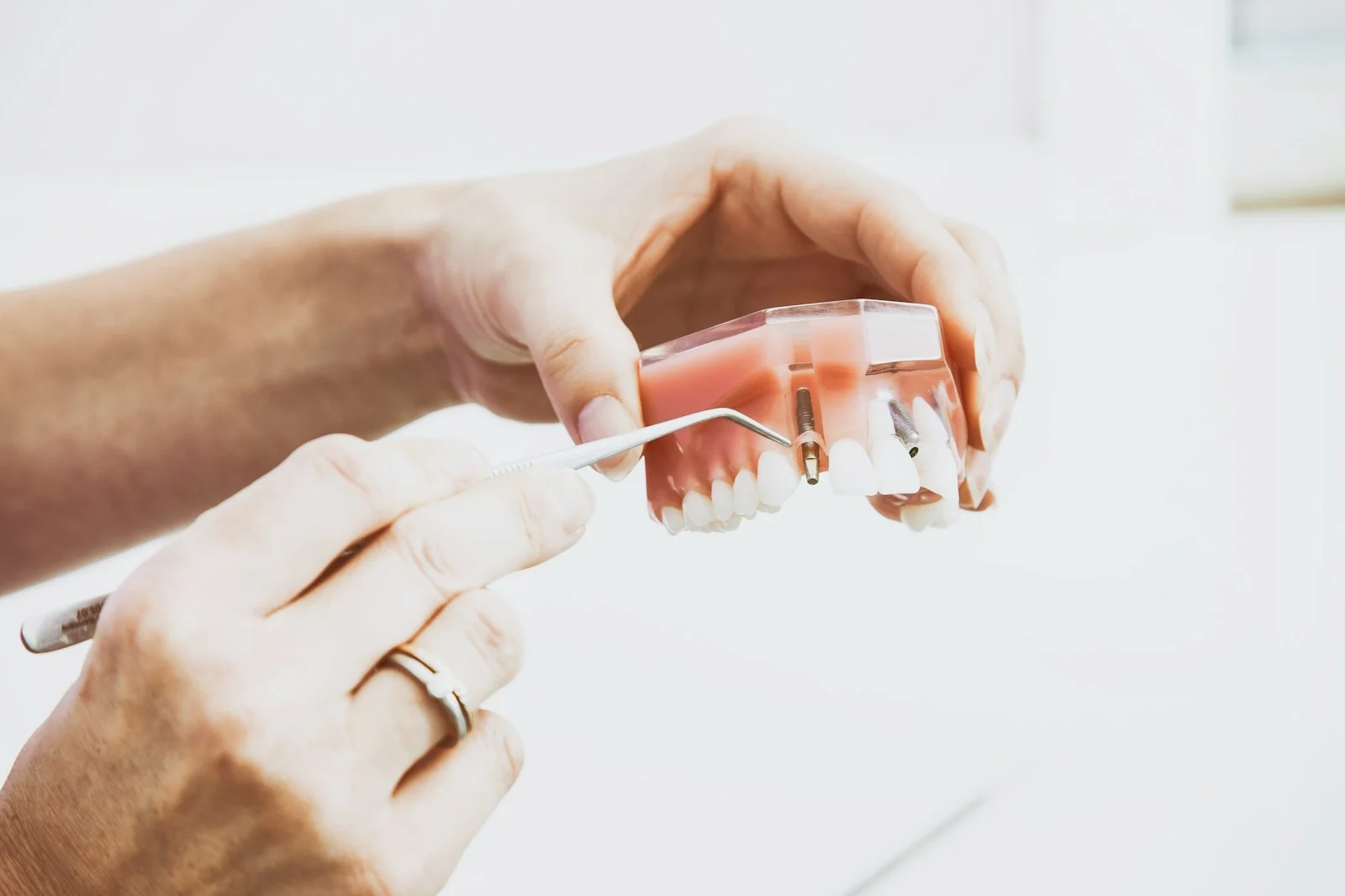
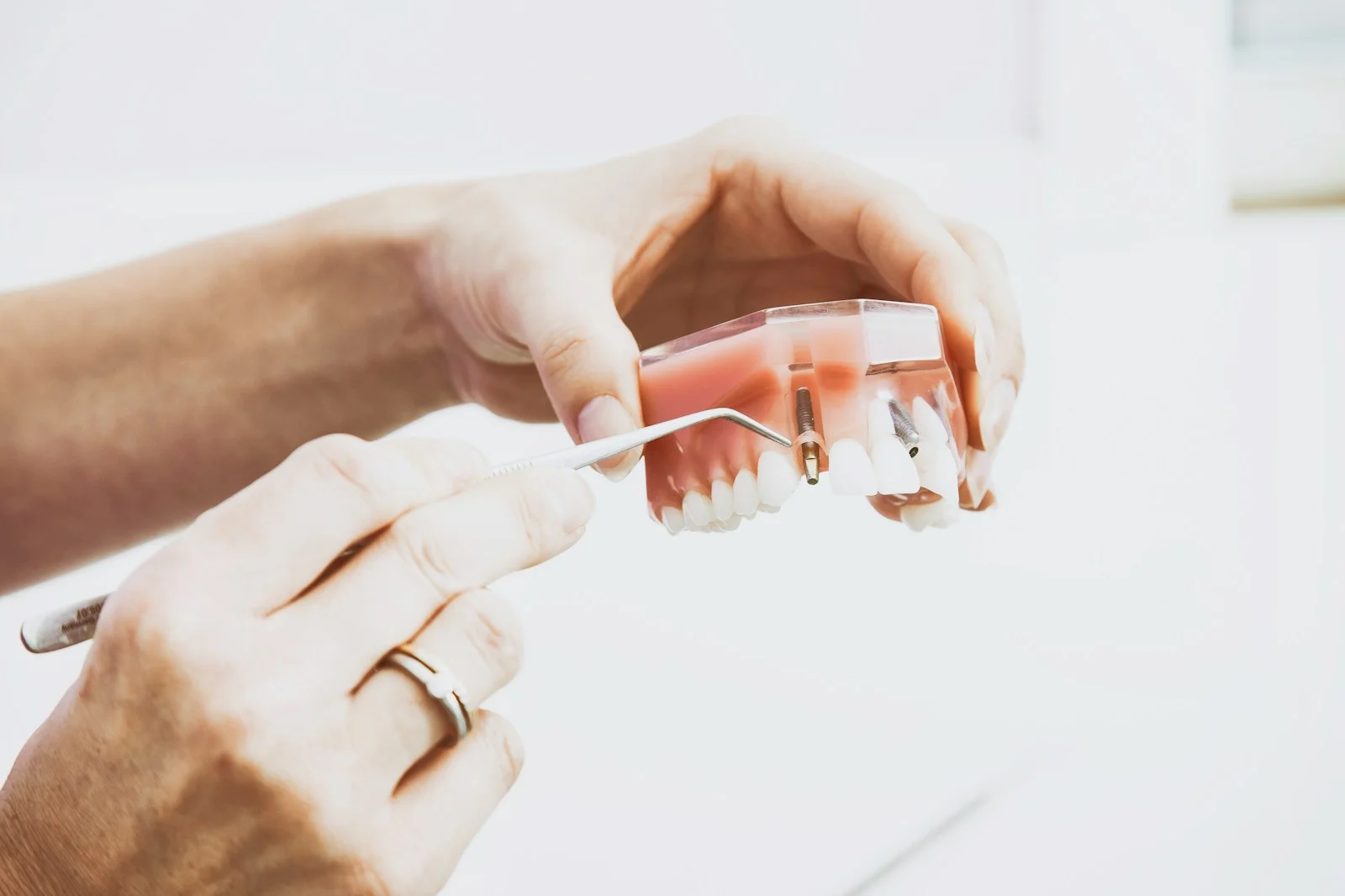
An implant is a small titanium post placed in the jawbone where the root used to be. After healing, a connector and crown sit on top. The implant does not rely on neighbouring teeth for support, so untouched neighbours can stay untouched. Bone around a well-integrated implant continues to receive chewing load, which helps maintain volume in that site over time.
Implants need enough bone and healthy gums, and they need healing time before the final crown. Some sites need grafting first. Medical history, smoking, and cleaning habits influence success. An implant is not instant, and it is not suitable for every anatomy without preparation. When conditions are right, it often feels closest to a natural tooth in day-to-day chewing.
- Bridge: uses neighbouring teeth as supports; usually faster to complete when those teeth are suitable
- Implant: stands on its own in bone; leaves healthy neighbours uncut when anatomy allows
- Bridge care focuses on cleaning under the false tooth and protecting the support teeth
- Implant care focuses on gum health around the post and avoiding heavy neglected plaque
- Bone volume, gum thickness, and bite force help decide which path fits
- Cost and timeline differ; we map both against your priorities before you choose
Questions that usually clarify the choice
Are the neighbouring teeth already heavily filled or cracked? A bridge may use crowns they need anyway. Are the neighbours perfect? An implant may spare them. Is bone thin after a long-standing gap? We discuss grafting or alternative designs. Do you grind heavily at night? Both options need protection planning, sometimes with a guard. How soon do you need a fixed tooth for a wedding, travel, or work speaking role? Temporary solutions can bridge time while a longer plan finishes.
Removable partial dentures remain a valid third path when bridges or implants are not ideal yet. They are less fixed, but they can restore appearance and some function while health, budget, or healing catch up. We mention them so you know the full menu, not because they are “lesser,” but because honesty includes options.
Longevity and what “failure” really means
Bridges can last many years with good hygiene and stable supports. Trouble often starts if decay forms at the crown edges or if one support tooth needs a root canal later. Implants can also serve for many years; problems more often relate to gum inflammation around the implant or overload from bite habits. Neither is maintenance-free. Both need check-ups. Thinking in decades with care beats hunting for a forever promise on a brochure.
If a bridge eventually needs replacement, we reassess the supports. If an implant crown chips, the post may still be fine. Planning with that long view reduces surprise. We also talk about what happens if you delay any replacement: drifting teeth and bite changes can make later work more complex, so even a temporary plan is better than an open gap left unmanaged.
Making the decision with us
Bring your questions. Bring old X-rays if you have them. Tell us what matters most — keeping neighbours intact, finishing sooner, or aiming for a stand-alone root replacement. Dr. Neeraj Chauhan will examine the site, review images, and outline realistic steps for bridge, implant, or a staged approach.
- Bone and gum health at the site
- Condition of neighbouring teeth
- Timeline, budget, and surgery comfort
- Implants stand alone in bone
- Bridges use neighbouring teeth for support
- Maintenance differs — we map both clearly
If you are missing a tooth and feeling stuck between options, book a consultation at Tooth and Gums, Greater Noida, or send a WhatsApp note with your concerns. We will not rush you into a single answer. We will help you weigh bridge versus implant against your own mouth, so the choice feels steady rather than sales-driven.