If someone has mentioned a root canal to you, you might already be picturing something dramatic. In real clinic life at Tooth and Gums in Greater Noida, the visit is usually quieter than the stories people tell. A root canal is simply a way to calm an infected or badly inflamed nerve inside a tooth so you can keep the tooth instead of removing it. I am Dr. Neeraj Chauhan, BDS, and this is the plain walkthrough I give patients before we start.
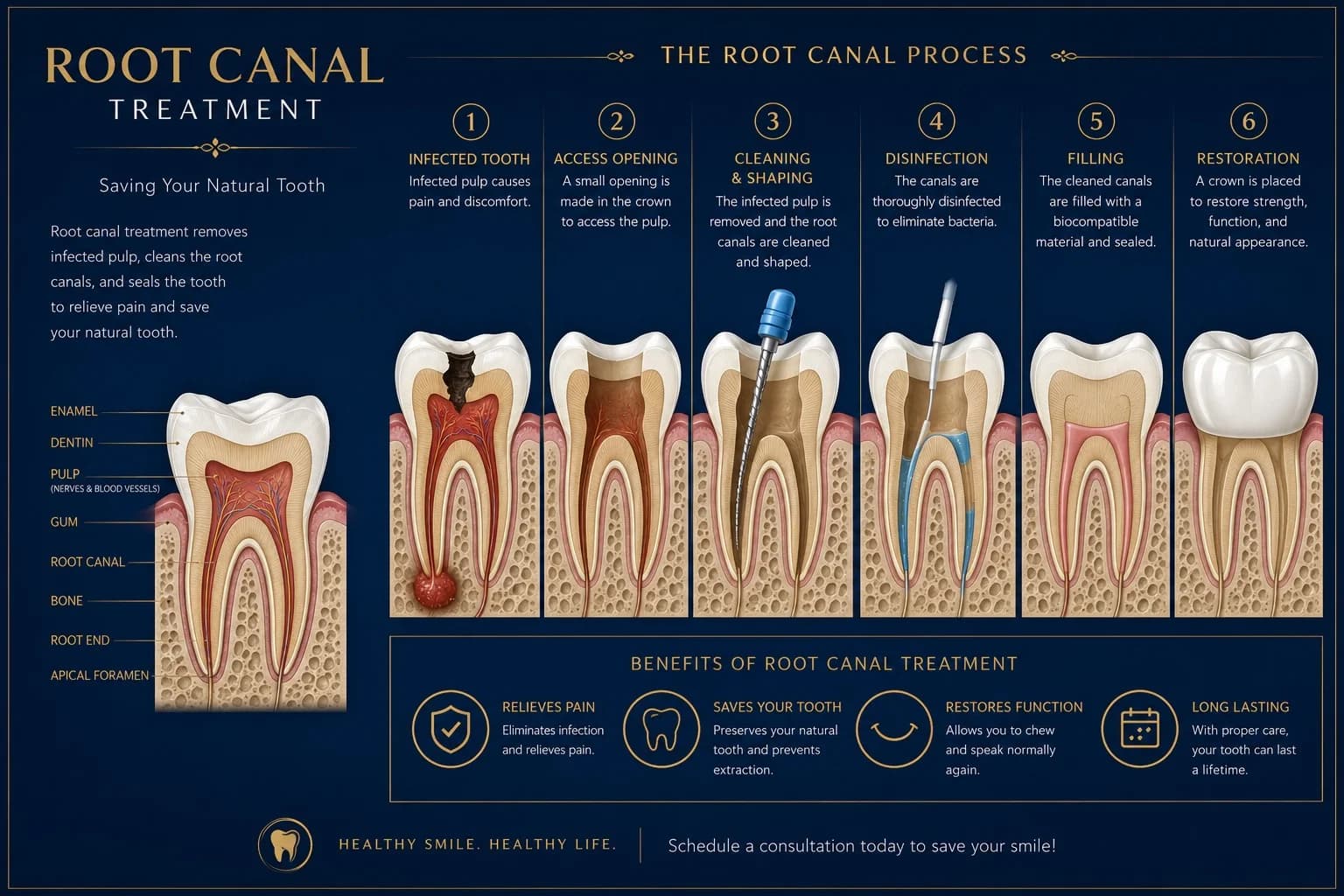
The tooth has a soft centre called the pulp. When deep decay, a crack, or an old injury lets bacteria in, that pulp can become irritated or infected. You may feel lingering pain with hot drinks, night-time throbbing, or swelling near the gum. Sometimes there is almost no pain, and we only discover the problem on an X-ray. Either way, the goal of treatment is the same: clean the inside of the canals, seal them, and protect the tooth so you can chew comfortably again.
What we check before we begin
We start with a conversation about your symptoms and a careful look at the tooth and the gum around it. An X-ray helps us see the root shape, any shadow of infection at the tip, and whether neighbouring teeth are involved. If the tooth is too broken to restore later, we talk about that honestly. Keeping a tooth only makes sense when we can also rebuild it into something strong enough for daily eating.
Once we agree that a root canal is the right path, we explain how many visits we expect. Some cases finish in one longer appointment. Others need a second visit if the infection is heavy or the canals are curved. You will always know the plan before we place the rubber dam and begin cleaning.
- Pain history and which temperatures trigger it
- X-ray of the roots and surrounding bone
- A plain explanation of one-visit vs two-visit plans
Numbing and keeping the area dry
Local anaesthetic is the first clinical step. We wait until the area is properly numb so you should feel pressure and vibration, not sharp pain. A thin sheet called a rubber dam isolates the tooth. That keeps saliva out and keeps cleaning solutions where they belong. It also means you do not have to keep your mouth wide open around a wet cotton roll for the whole visit.
If you are anxious, tell us early. We work at a steady pace, pause when you need a break, and check in with a hand signal so you do not have to talk with instruments in place. Many people are surprised by how manageable the appointment feels once the tooth is numb and the room is calm.
Cleaning the canals, step by step
We make a small opening through the biting surface or the back of the tooth to reach the pulp chamber. From there, fine instruments follow the natural canals down toward the root tips. We gently remove inflamed or infected tissue and rinse repeatedly so debris does not stay behind. The length of each canal is measured carefully so we clean to the end without going past it.
- Opening the tooth to reach the pulp chamber
- Shaping and cleaning each canal with fine files
- Flushing with disinfectant solutions between steps
- Drying the canals and placing a sealing material
- Closing the tooth with a temporary or permanent filling
When the canals are clean and dry, we fill them with a biocompatible sealing material so bacteria have nowhere useful to settle. A temporary filling often covers the opening if a permanent restoration or crown is planned for a later visit. If the tooth already has enough structure and the infection was straightforward, we may place a stronger core filling the same day.
How you may feel afterward
Mild tenderness for a day or two is common, especially when you bite. That usually settles with the pain relief we recommend and soft food on that side. Swelling that was present before treatment often improves as the infection calms. Call or message us if pain increases sharply, if swelling grows, or if you develop a fever. Those situations are uncommon, but we want to hear from you quickly if they happen.
Avoid chewing hard foods on the treated tooth until the final crown or definitive filling is in place. A root-canal-treated tooth can become more brittle over time, so protecting it matters as much as cleaning the canals. We will discuss whether a crown is wise for your particular tooth based on how much natural structure remains.
- Soft food on that side for a day or two
- Prescribed or advised pain relief on schedule
- A crown discussion so the tooth stays strong long term
Why finishing the restoration matters
A successful root canal is only half the story. The tooth still needs a sealed, strong outer surface. Leaving a temporary filling for months invites leakage and fracture. When we schedule your crown or permanent build-up promptly, we protect the work already done and give you a tooth you can trust again for meals, conversation, and sleep without that dull ache returning.
If you have been putting off care because of fear, bring the questions you have been holding. At our Sector 16B clinic we can examine the tooth, show you the X-ray in simple terms, and outline visits, comfort measures, and aftercare before you decide. WhatsApp or call Tooth and Gums when you are ready, and we will find an appointment that fits your week.
If you are in Greater Noida and need root canal treatment, see what to expect at our Greater Noida clinic.