When a cavity shows up on a checkup, most patients ask two questions: will it hurt, and will the filling look obvious? Tooth-coloured fillings — the composite resins we place most often at Tooth and Gums — answer the second question well for many teeth. Dr. Neeraj Chauhan, BDS, uses them to rebuild decayed or chipped areas so the repair blends with neighbouring enamel. They are not magic, and they are not right for every situation, but for everyday cavities they are a practical, natural-looking choice.
A filling’s job is simple to describe and careful to do: remove soft, infected tooth structure, shape a clean cavity form, and restore strength and contour so you can chew without trapping food. Colour matching is the part you see in the mirror. Seal and shape are the parts that decide how long the repair lasts.
How a tooth-coloured filling appointment usually runs
We begin by confirming which tooth is involved and whether the decay is shallow, moderate, or close to the nerve. Numbing is offered whenever the tooth would be uncomfortable; many small fillings are still kinder with anaesthesia. After the area is numb, we isolate the tooth as well as the situation allows, remove decay, and check that the remaining walls are sound. The composite is placed in layers, shaped to your bite, hardened with a curing light, and polished so the margin feels smooth to your tongue.
You will hear us check the bite with thin marking paper. A high filling can make a tooth ache for days, so we adjust until contact feels even. The whole visit for a single moderate cavity is often shorter than people fear, especially when the tooth was caught early.
Where tooth-coloured fillings shine
Front teeth and visible premolars benefit most from colour matching. Small to medium cavities on chewing teeth also do well when enough enamel remains to bond to. Composite can repair worn edges, close small gaps in selected cases, and replace old fillings that have stained margins or tiny leaks. Because the material bonds to tooth structure, we can often conserve more healthy enamel than older approaches required.
- Blends with natural tooth shade for a discreet repair
- Bonds to enamel and dentine, which can mean less drilling in suitable cases
- Can be repaired or polished later if a small chip appears
- Sets quickly with a curing light, so you can usually eat once numbness fades
- Works well for many chips, worn edges, and classic cavity shapes
When another option may be wiser
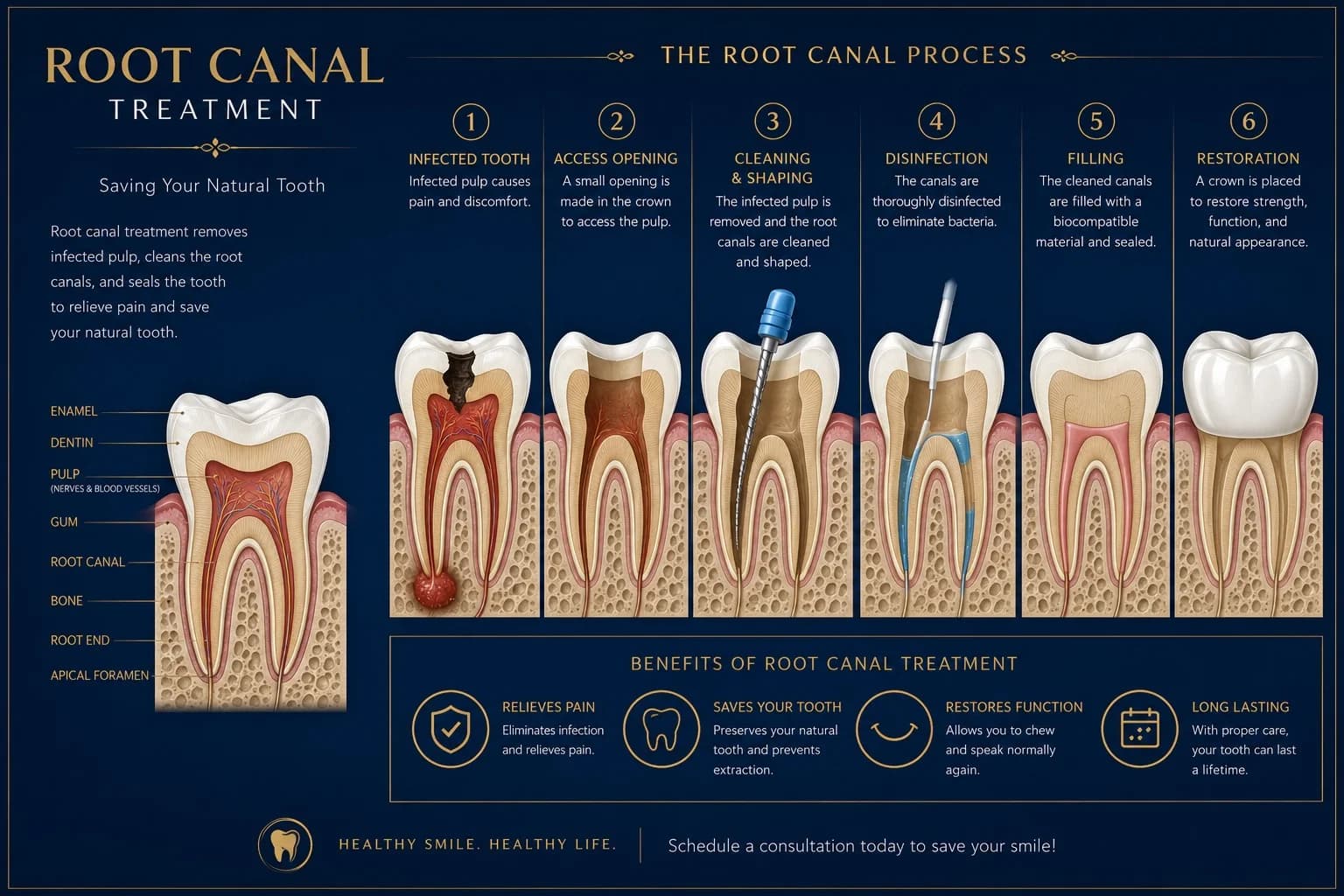
Very large cavities that destroy cusps may need an onlay or crown for strength. Teeth with cracks through the root, deep infection, or repeated filling failures need a different conversation — sometimes root canal treatment and a protective crown, sometimes extraction and replacement. Heavy grinders can wear or fracture big composites; we talk about night guards and coverage options when wear patterns are obvious.
Moisture control matters for bonding. If a tooth sits far back and stays wet despite our best isolation, we may choose a material better suited to that environment or stage the visit differently. Honesty about limitations protects you from early failure.
Sensitivity after a new filling
Mild cold sensitivity for a few days is common, especially if decay was close to the nerve or the filling is on a root surface. It should trend downward, not escalate into spontaneous throbbing. Bite tenderness that appears only when you close hard often means a high spot — a quick adjustment usually settles it. Persistent sharp pain on biting, or pain that wakes you at night, deserves a prompt message so we can recheck the tooth.
We also remind patients not to judge the final colour under the dental light alone. Drink water, let lips return to normal tone, and look in natural light the next day. Tiny polish refinements are easy if a margin feels fuzzy to your tongue.
Looking after a filled tooth
Brush gently along the gum line and clean between teeth so the margin does not collect plaque. Sticky sweets and hard ice chewing are hard on any restoration. If you grind, tell us — protecting the filling often means protecting the whole tooth. Regular checkups catch wear, stain at the edge, or a new cavity on another surface before the repair is lost.
Old metal fillings do not automatically need replacement if seals are intact and the tooth is quiet. We replace them when there is leakage, fracture, active decay, or a clear cosmetic reason you care about. Changing fillings “just because” removes healthy tooth each time, so we weigh benefit against cost to the tooth.
Cost and timing, spoken plainly
Fees depend on size, location, and whether a liner or rebuild is needed. We share an estimate before we start. One tooth can often be completed in a single visit; several cavities may be spaced so numbness and chair time stay comfortable.
- Numbing first, then decay removal
- Layered tooth-coloured resin bonded in place
- Bite check so the filling does not feel high
- Avoid chewing hard food until numbness fades
- Mild sensitivity can last a few days
- Call us if the bite feels uneven after 48 hours
If a dark spot, food trap, or cold twinge has you wondering about a cavity, book a checkup at Tooth and Gums. Dr. Neeraj Chauhan will show you what is happening and whether a tooth-coloured filling is the right repair. WhatsApp or call with a preferred time — and mention pain if you have it — so we can plan a visit that fixes the problem without drama.