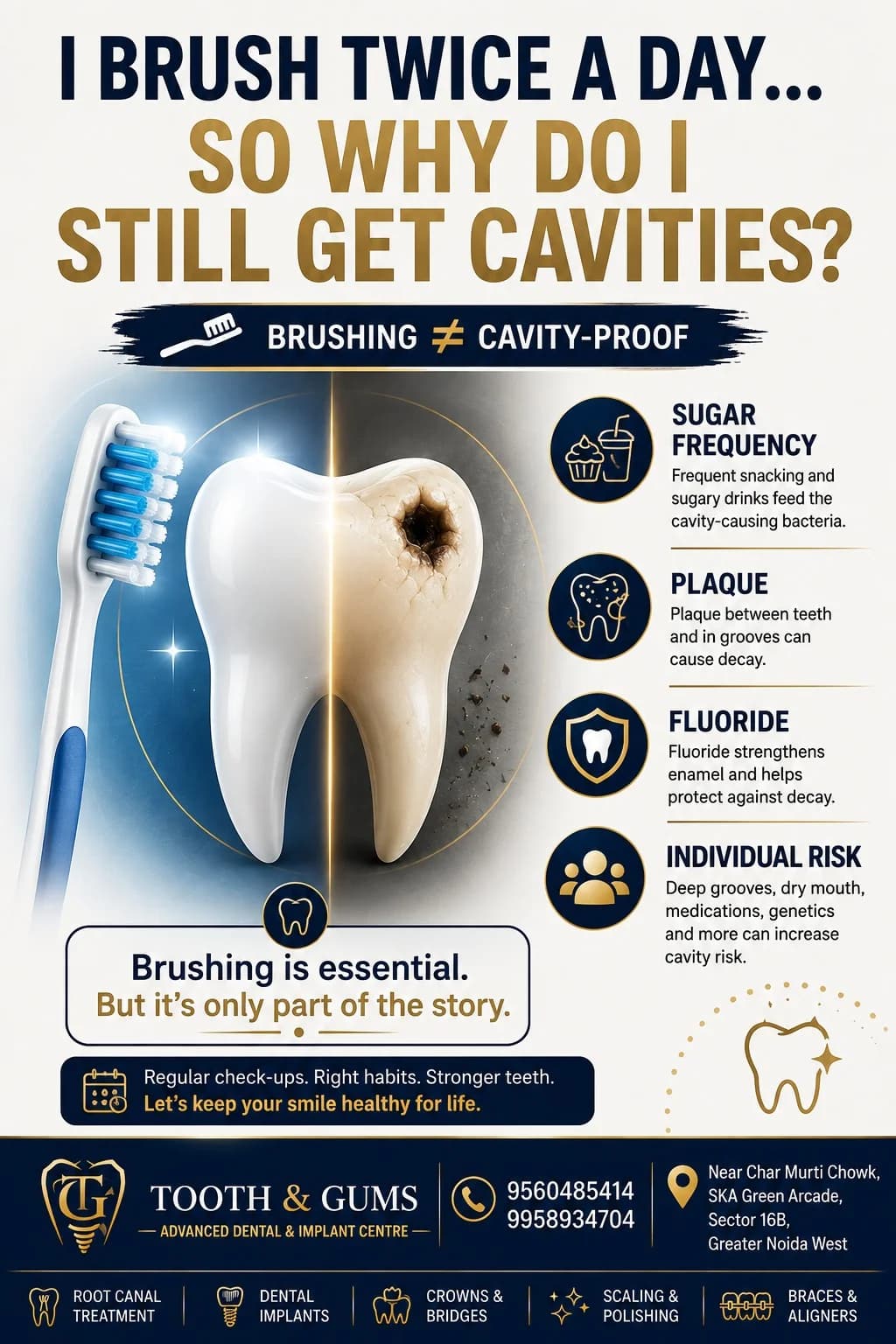
Brushing twice a day is the base of home care. It is also not the same job as a professional scaling and polish. Patients often ask why they need a cleaning if they already brush well. The short answer is that a toothbrush reaches soft plaque on accessible surfaces. Hardened tartar, deposits under the gum edge, and stain in grooves need instruments home kits cannot match. At Tooth and Gums in Greater Noida, Dr. Neeraj Chauhan (BDS) explains the difference without making anyone feel scolded — most people are doing their best with the tools they have.
Think of home brushing as daily sweeping and clinic scaling as the deeper tidy that keeps corners from building up. Skip the daily sweep and the room suffers quickly. Skip the deeper tidy for too long and the buildup becomes mineralised and harder on the gums. Both matter. Neither replaces the other.
What plaque and tartar actually are
Plaque is a soft film of bacteria and food residue. It forms every day. Soft plaque can be disrupted with a brush and interdental cleaning. When minerals from saliva settle into that film, it hardens into tartar (calculus). Tartar clings to the tooth, especially along the gumline and between teeth. Once hard, it will not brush away, no matter how firmly you scrub — and scrubbing harder only risks scraping enamel or bruising gums.
Tartar irritates the gum edge. Gums may look red, bleed when you floss, or feel puffy. Bleeding is a message, not a reason to avoid cleaning. With the deposits removed and home care guided, bleeding usually settles. Leaving tartar in place lets inflammation simmer quietly, which is how early gum problems grow into deeper pocketing over years.
- Soft plaque brushes away
- Hardened tartar needs professional scaling
- Polish helps new plaque stick less
What happens during scaling and polish
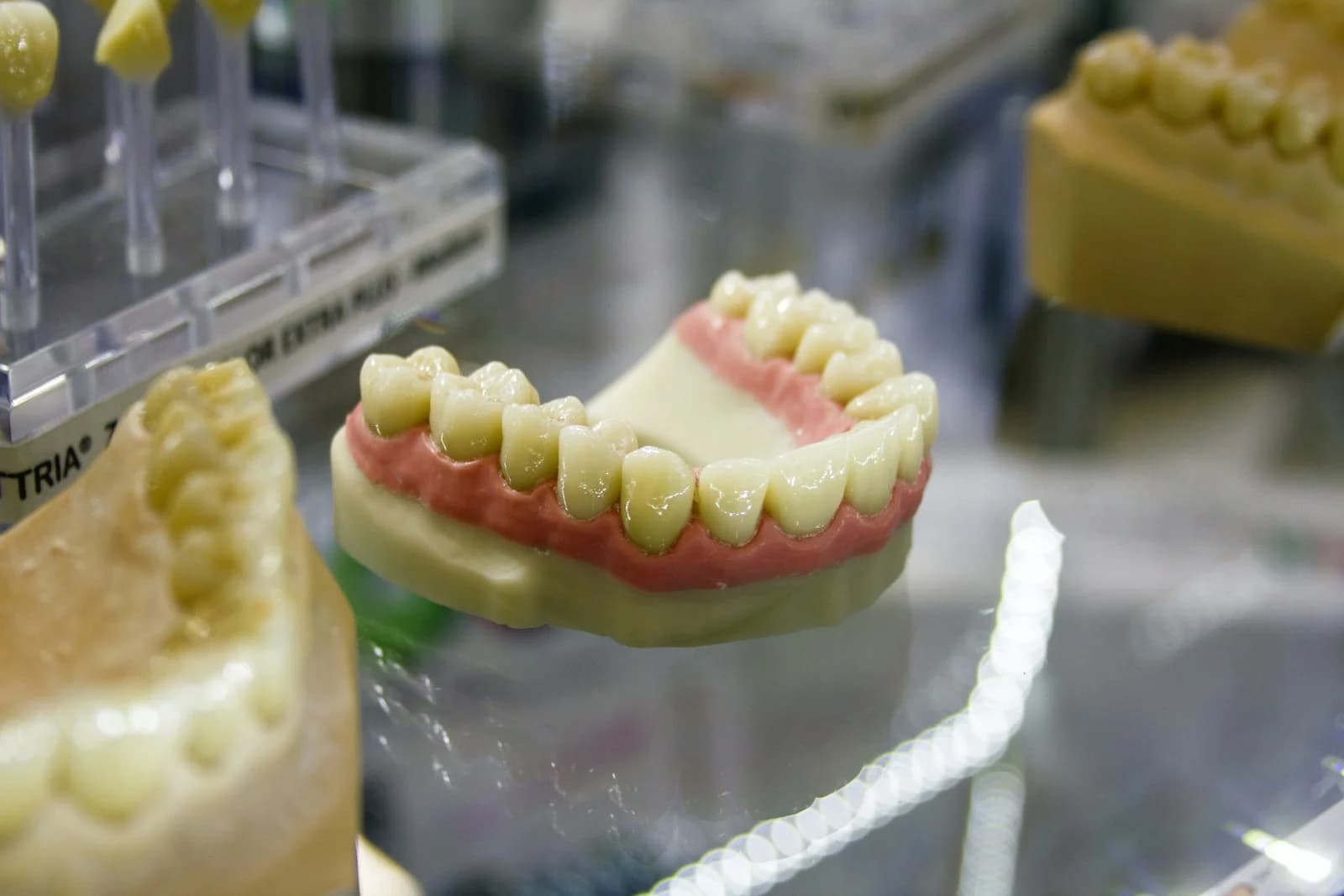
Scaling uses hand instruments or a gentle ultrasonic tip to lift tartar from tooth surfaces and just under the gum margin. You may hear a humming sound and feel vibration or light scraping. Water spray keeps the area clear. We work systematically around each tooth so hidden ledges are not missed. If gums are already inflamed, there can be mild tenderness during or after — we pace the visit and pause when you need a breath.
Polish follows with a soft cup and fine paste. It smooths rough spots and lifts many surface stains from tea, coffee, or tobacco. Polish is not only cosmetic; smoother surfaces make it harder for new plaque to stick in the first days after cleaning. We finish with advice tailored to your mouth: brush angle, interdental brushes, or where you tend to miss.
- Daily brushing removes soft plaque you can reach; it does not remove hardened tartar
- Scaling clears mineralised deposits along and under the gum edge
- Polish smooths surfaces and reduces stain that brushes leave behind
- Bleeding gums usually improve after deposits are removed and home care is adjusted
- Timing between cleanings depends on your buildup rate, not a single fixed rule for everyone
- Hard scrubbing at home cannot replace instruments and often irritates tissue
Where a basic brush still wins every day
No clinic visit can brush for you between appointments. Soft bristles, a pea-sized amount of fluoride toothpaste, and two minutes of gentle circles beat aggressive horizontal scrubbing. Reach the gumline without stabbing into it. Clean between teeth once a day with floss or small interdental brushes sized for your gaps. If you only brush the fronts that show in the mirror, the insides and back molars quietly collect film.
Electric brushes help many people stay consistent, but a careful manual brush is still effective. Method matters more than the brand sticker. Tongue cleaning reduces morning breath for some. Rinses can freshen, yet they do not remove tartar — treat them as a helper, not a substitute.
How often should you book a scaling?
Some mouths form tartar slowly; others form it within months despite good brushing. Dry mouth, crowded teeth, braces, pregnancy-related gum changes, and smoking can all speed deposits. We would rather set a recall that matches your pattern than insist on one calendar for everyone. After your cleaning we look at how much came off and how your gums responded, then suggest a sensible interval.
If it has been years since a professional clean, expect a thorough first visit and honest talk about home habits. Surface stains may lighten a lot; deep colour inside the tooth will not vanish with polish alone. We keep expectations clear so you are not disappointed by magic dentistry cannot deliver in one sitting.
Comfort, myths, and aftercare
Scaling does not “make teeth loose” when done properly. Inflamed gums can feel different once swelling drops, and teeth may feel newly sensitive to cold briefly because the insulating tartar layer is gone. Sensitivity toothpaste and gentle technique usually settle this. Gaps may seem more noticeable if gum inflammation shrinks — that is healthier tissue finding its place, not damage from the cleaning.
- Brush two full minutes twice daily
- Clean between teeth once a day
- Return on the interval we recommend
Brushing alone is proud daily work. Scaling and polish are the clinic half of the same goal: calm gums and cleaner tooth surfaces. If you are unsure whether you are due, or if brushing causes bleeding that worries you, message Tooth and Gums on WhatsApp or book a visit with Dr. Neeraj Chauhan. We will show you what your brush is already handling well and what needs a professional hand — without guilt, and with a plan you can keep.
Book a scaling and polish visit at our clinic — see our teeth cleaning page in Greater Noida.