Gum disease sounds dramatic, yet much of it begins quietly: bleeding on brushing, lingering bad breath, gums that look puffy, or tartar that returns soon after a cleaning. Treatment is not one identical procedure for every mouth. At Tooth and Gums in Greater Noida, Dr. Neeraj Chauhan, BDS, matches the plan to how deep the inflammation goes — from a careful surface cleaning to staged deep cleaning under the gum line. This article walks through what those steps feel like, what healing looks like, and how home care locks in the result.
The encouraging truth is that early gum disease is often reversible at the soft-tissue level. Even when bone has begun to recede, thoughtful cleaning and steady habits can slow or stop further loss for many patients. Fear of the dental chair should not be the reason tartar stays put for another year.
Gingivitis versus periodontitis, in plain words
Gingivitis is inflammation of the gum edge without loss of the bone that holds the tooth. Gums bleed and look red, but the attachment can recover when plaque and tartar are removed and daily cleaning improves. Periodontitis means the supporting bone and fibres have been damaged. Pockets form where the gum has detached, tartar sits below the gum line, and teeth may eventually loosen if nothing changes.
We diagnose with a periodontal charting — measuring pocket depths — plus a visual exam and X-rays when bone levels need confirming. You will hear numbers and locations explained in everyday language: which areas are mild, which need deeper work, and which teeth are stable.
Treatment for early gum inflammation
For gingivitis, a thorough scaling and polish, paired with coaching on brush angle and interdental cleaning, is usually the core treatment. We remove the local irritants and ask you to keep the gum line clear every day. A short review visit helps us confirm bleeding has dropped. Mouth rinses may support the first weeks; they do not replace mechanical cleaning.
If a rough filling overhang or crowded contact keeps shredding the gum, we address that too. Otherwise the inflammation has a built-in reason to return.
What deep cleaning (root planing) involves
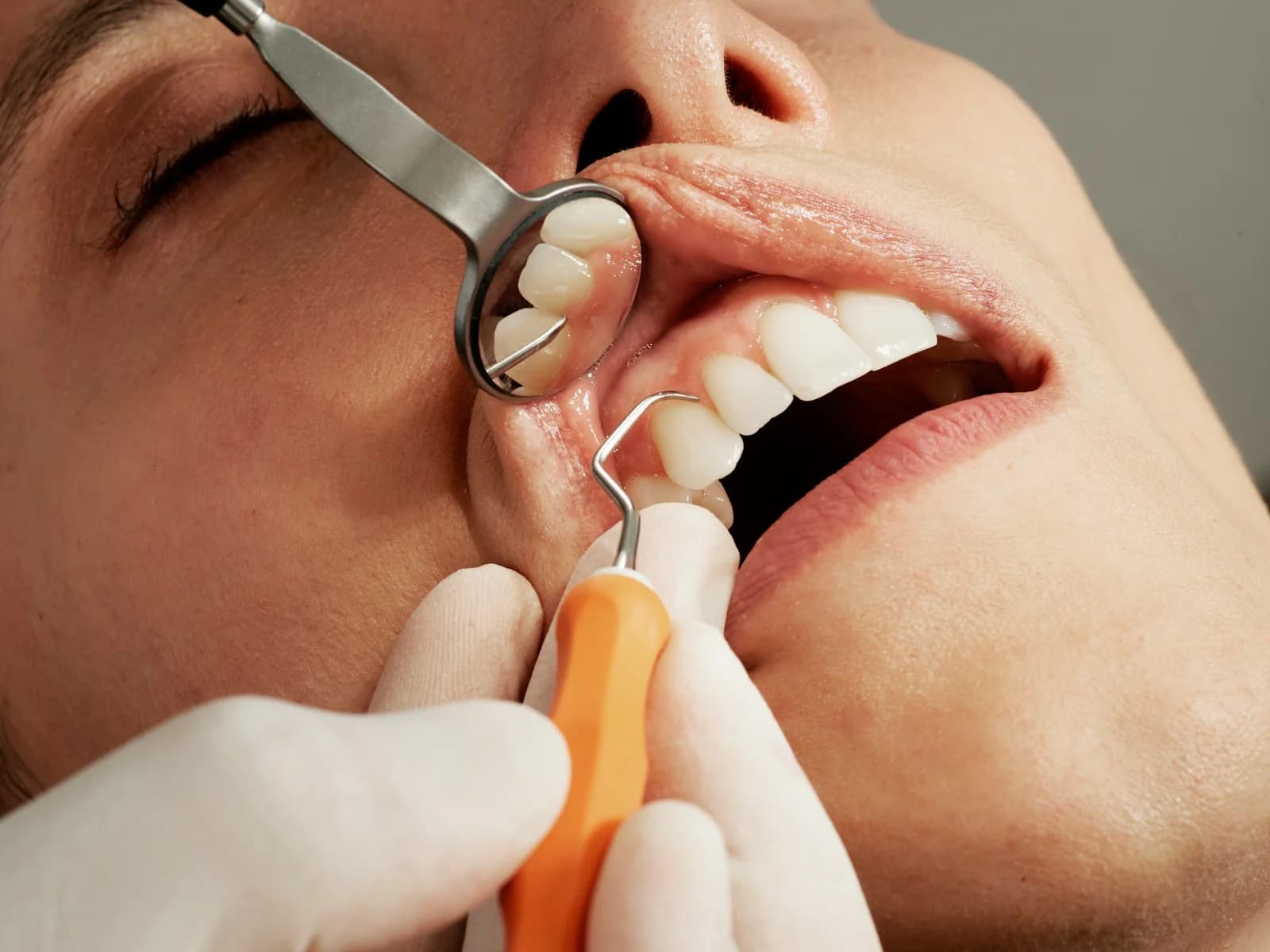
When pockets and underground tartar are present, we plan root planing — a careful cleaning of root surfaces below the gum. The mouth is often treated in sections across more than one visit so numbing stays comfortable and you are not overwhelmed in a single long session. After anaesthesia, instruments remove calculus from root faces and the area is left as smooth as practical so gums can reattach more closely.
- Local numbing so deep cleaning stays tolerable
- Scaling under the gum to remove hidden tartar
- Root surface smoothing to discourage new deposits
- Clear instructions for the next 48 hours of home care
- A follow-up to measure how pockets and bleeding have changed
You may notice tenderness, mild bleeding when cleaning, and sensitivity to cold for several days as roots that were covered become accessible. Soft foods, lukewarm drinks, and gentle brushing help. We tell you which symptoms are expected and which — such as increasing swelling or fever — should bring you back quickly.
Medicines, lasers, and surgery — where they fit
Antibiotics are sometimes used as an adjunct in selected cases, never as a stand-alone cure. Antimicrobial gels or rinses may support healing after deep cleaning. Laser assistance is discussed only when it adds clear benefit for your situation; it is not a replacement for removing deposits. Surgical gum procedures are reserved for advanced patterns that do not respond to thorough non-surgical care, and we explain referral or next steps if your case needs that level of intervention.
Implants, bridges, and partial dentures sitting in an inflamed mouth need gum stability first. Building fancy work on active periodontitis is a short path to frustration. Sequence matters: control infection and inflammation, then restore.
Your role between appointments
Clinic cleaning opens the door; daily habits walk through it. Soft brushing at the gum line, interdental brushes or floss once daily, and tongue cleaning keep bacterial load down. If dexterity is limited, we adapt tools — floss holders, wider grips, or water flossers as helpers, not magic wands. Smokers get frank advice because tobacco slows healing and hides bleeding signs.
Diabetes control, if relevant, strongly influences gum response. We work with the medical reality you bring, not against it. Three- to four-month maintenance cleanings are common after active therapy until we see a stable pattern.
What success looks like
Success is quieter gums, less bleeding, fresher breath, and pockets that shrink or stabilise. Teeth that were slightly mobile may feel firmer as swelling drops — or they may reveal mobility that tartar had been masking, which then guides a honest discussion about long-term prognosis. We celebrate improvement without promising that lost bone grows back to its original height in every case.
- Pocket measurements and X-rays when useful
- Deep cleaning under the gum line
- Review visits to confirm healing
If bleeding, bad breath, or a family history of tooth loss has you concerned, start with a gum evaluation at Tooth and Gums. Dr. Neeraj Chauhan will explain whether you need a standard cleaning, staged deep cleaning, or a maintenance rhythm after earlier therapy. Book by phone or WhatsApp with a preferred time, and mention swelling or loose teeth if you have them. Gum treatment works best when it is understood, paced kindly, and backed by habits you can keep.
- Less bleeding when you brush
- Fresher breath
- Stable teeth and calmer gums